


Tirta Empul Temple in Tampaksiring: Bali’s Sacred Water Temple
Introduction
Tirta Empul Temple, located in the village of Tampaksiring in central Bali, is a revered Hindu water temple famous for its holy spring water and purification rituals. This ancient temple, surrounded by lush tropical greenery, holds great spiritual significance for the Balinese people and attracts visitors seeking spiritual cleansing and cultural immersion.
Historical and Cultural Significance
The history of Tirta Empul Temple dates back to the 10th century during the Warmadewa dynasty, though the current temple complex was rebuilt in 1954. The temple is dedicated to Vishnu, one of the principal deities in Hinduism, and features a large bathing pool fed by natural springs. Legend has it that the sacred spring water at Tirta Empul was created by the god Indra and possesses powerful healing properties.
Purification Rituals and Sacred Spring
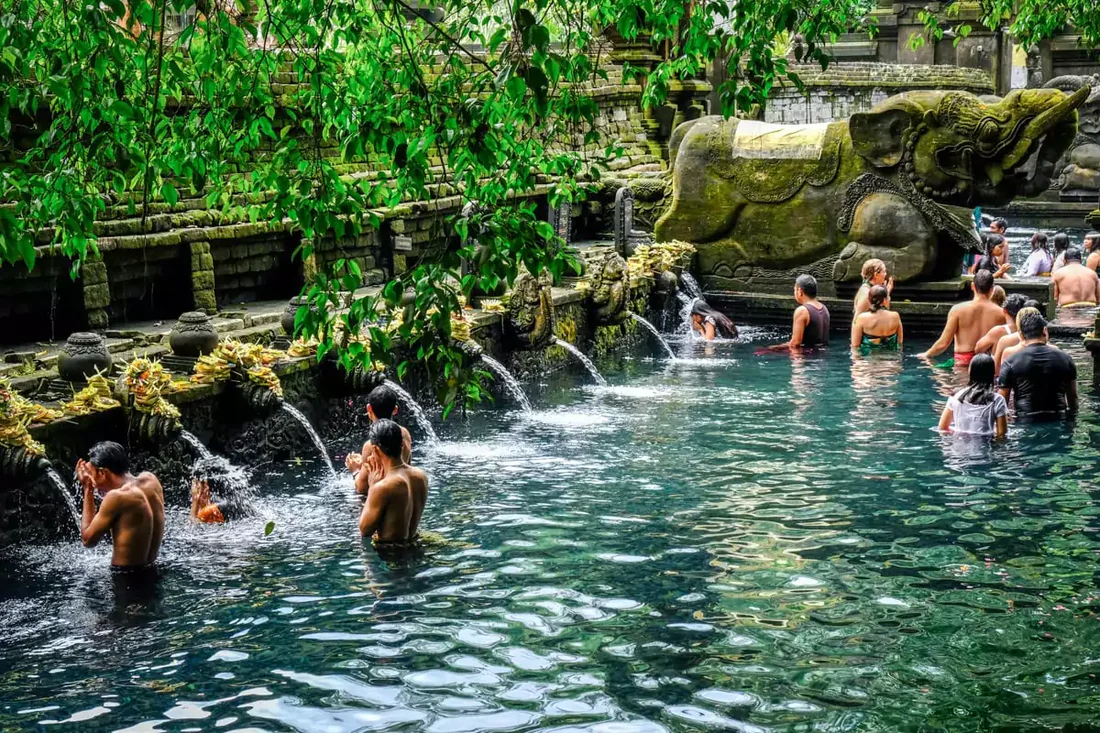
The highlight of Tirta Empul Temple is its sacred spring, which is believed to have curative properties and spiritual cleansing abilities. Pilgrims and visitors come to the temple to participate in purification rituals known as “melukat,” where they bathe in the spring water as part of a spiritual cleansing process. The purification rituals involve prayers and offerings, guided by Hindu priests, to seek blessings, health, and prosperity.
The temple complex includes a series of intricately carved shrines, pavilions, and courtyards surrounding the sacred spring. Stone sculptures and Balinese architectural elements adorn the temple, reflecting its historical and cultural importance.
Architecture and Sacred Spaces
Tirta Empul Temple is renowned for its traditional Balinese architecture and serene ambiance. The temple’s layout follows a series of courtyards and terraces leading to the main bathing pool. Visitors pass through ornate Balinese gates, known as “candi bentar,” and stone-carved structures depicting scenes from Hindu mythology.
The central bathing pool features 30 water spouts, each with its own specific ritual purpose. Devotees move from spout to spout, performing cleansing rituals and prayers, under the guidance of priests. The architectural harmony and spiritual symbolism of Tirta Empul Temple create a tranquil and sacred atmosphere for contemplation and devotion.
Cultural Experience and Tourism
Visiting Tirta Empul Temple offers a profound cultural and spiritual experience. The temple grounds are often bustling with activity during religious festivals and ceremonies, providing insights into Balinese Hindu rituals and traditions. Many visitors also come to witness or participate in the temple’s unique purification rituals, gaining a deeper understanding of Balinese spiritual practices and beliefs.
Surrounding the temple, the village of Tampaksiring offers opportunities to explore traditional Balinese culture, with local markets, art galleries, and nearby historical sites such as the presidential palace of Tampaksiring.
Conclusion
Tirta Empul Temple in Tampaksiring is more than a tourist attraction; it is a spiritual sanctuary where Balinese Hindu traditions come to life. Its sacred spring, purification rituals, and architectural beauty make it a must-visit destination for those seeking cultural immersion and spiritual rejuvenation in Bali. A visit to Tirta Empul Temple offers a profound glimpse into the island’s rich religious heritage and the enduring spiritual practices that continue to shape Balinese culture today.