
Ujung Water Palace: Karangasem’s Majestic Oasis
Introduction
Ujung Water Palace, also known as Taman Soekasada Ujung, is a stunning historical landmark located in Karangasem Regency, East Bali. This water palace is renowned for its beautiful architecture, serene water features, and panoramic views of the surrounding landscapes. Built in the early 20th century by the King of Karangasem, Ujung Water Palace serves as a testament to the grandeur and sophistication of Bali’s royal heritage.
Historical and Architectural Significance
The construction of Ujung Water Palace began in 1909 under the reign of King Gusti Bagus Jelantik, also known as Anak Agung Anglurah Ketut Karangasem. The palace was initially conceived as a place of relaxation and entertainment for the royal family and their guests. The design of the palace reflects a blend of Balinese, Dutch, and Chinese architectural styles, showcasing the island’s cultural diversity and the king’s cosmopolitan vision.
Ujung Water Palace was significantly damaged by the eruption of Mount Agung in 1963 and a subsequent earthquake in 1976. However, it has since been restored to its former glory, retaining its historical charm and elegance.
Layout and Features
The palace complex spans over 10 hectares and is divided into three main sections: the lower, middle, and upper levels. Each level is connected by a series of elegant staircases and pathways, adorned with statues and ornamental plants.
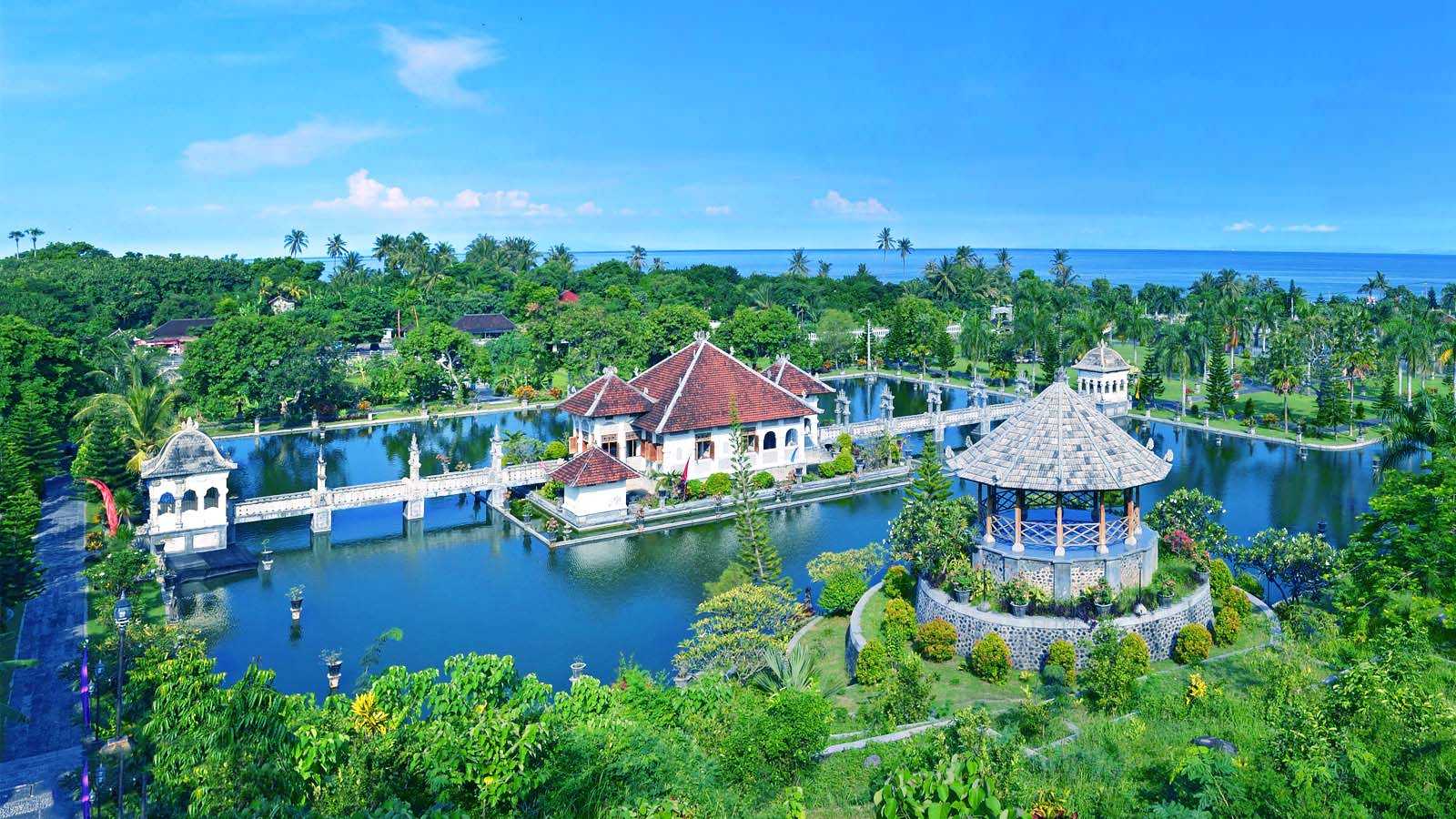
The lower level features expansive ponds and gardens, creating a tranquil and picturesque setting. The main pond, known as the “Bale Kambang,” is a large rectangular pool with a beautiful floating pavilion in the center. This pavilion, accessible via a stone bridge, was used by the royal family for relaxation and meditation.
The middle level houses the main building, “Bale Gili,” which is a grand structure situated in the middle of another large pool. This building served as a gathering place for the royal family and their guests, offering stunning views of the surrounding water features and gardens.
The upper level of Ujung Water Palace provides panoramic vistas of the surrounding countryside, including the nearby coastline and the majestic Mount Agung. This vantage point offers visitors breathtaking views and photo opportunities.
Scenic Beauty and Photography
Ujung Water Palace is a photographer’s paradise. The harmonious combination of water, architecture, and lush greenery creates a serene and picturesque environment. The reflective pools, elegant bridges, and intricate carvings offer countless opportunities for stunning photos, particularly during sunrise and sunset when the light adds a magical glow to the landscape.
Cultural Experience
Visitors to Ujung Water Palace can immerse themselves in the rich cultural heritage of Bali. The palace complex is often used for traditional ceremonies and cultural events, providing insights into the island’s royal history and customs. The serene ambiance and historical significance of the palace offer a unique cultural experience for tourists and locals alike.
Amenities and Accessibility
Ujung Water Palace is easily accessible from the town of Amlapura and other parts of East Bali. The site offers amenities such as parking, restrooms, and a small café where visitors can relax and enjoy refreshments. The well-maintained pathways and informative signage enhance the visitor experience, making it easy to explore and appreciate the beauty and history of the palace.
Conclusion
Ujung Water Palace is a remarkable blend of natural beauty, architectural elegance, and historical significance. Whether you’re strolling through its tranquil gardens, admiring the intricate design of its pavilions, or taking in the panoramic views from its upper levels, a visit to Ujung Water Palace promises a memorable and enriching experience that captures the essence of Bali’s royal heritage and scenic splendor.


